

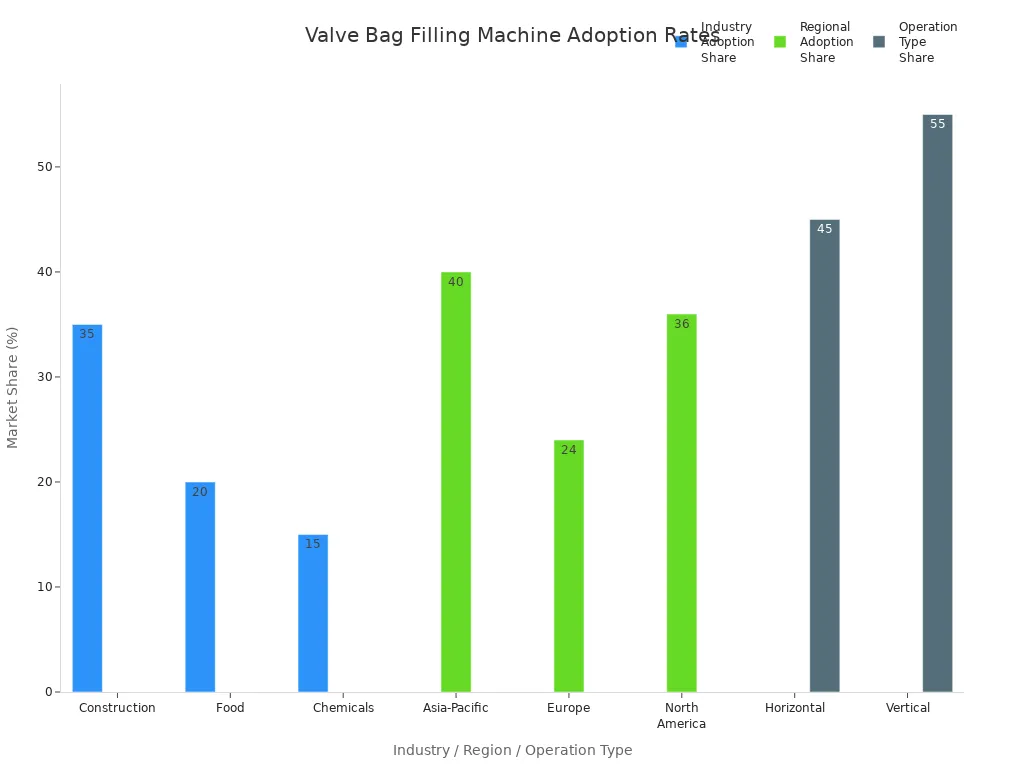
You can see the impact of valve bag filling machines across the global packaging industry. These machines now handle over 40% of industrial packaging in Asia-Pacific and nearly a quarter in Europe. Companies use them to achieve increased productivity and efficiency, reduce costs, and produce high-quality bags for products like cement, chemicals, and food. As automation grows, you gain faster throughput and less waste.

Key Features of Valve Bag Filling Machine That Drive ROI

Automation Level and User-Friendly Controls
You benefit from advanced automation when you use a valve bag filling machine. Modern machines feature compact bag pick-up systems and valve pre-opening assemblies. These ensure reliable bag placement, even if the bags are not perfect. High-speed robotic arms handle multiple spouts, which increases your throughput. Rugged support frames fit into your existing layout, making installation easier.
Tip: Automation saves labor and boosts operating efficiency.
You can also use intuitive controls that require minimal training. Real-time seal detection systems help you maintain product integrity. The design allows for easy cleaning and quick access. You spend less time on maintenance because the machines have fewer moving parts.
- Compact bag pick-up and valve pre-opening
- High-speed robotic arms
- Rugged, modular support frames
- Labor-saving automation
- Intuitive controls and easy cleaning
Adjustable Filling Speed and Throughput
You can adjust the filling speed to match your production needs. Automated valve bag fillers reduce human error and keep your operation running smoothly. Technologies like the Bag-on-Spout Sensor (B.O.S.S.) check bag placement before filling starts. This prevents false starts and reduces waste. Consistent throughput means you avoid downtime and lower your cleanup costs.
Regular maintenance and operator training help you keep the machine running at peak performance. You maximize productivity and save money by reducing product loss and avoiding delays.
Note: Stable throughput leads to cost savings and better resource use in your packaging operation.
Precision, Accuracy, and Consistency
You achieve consistent bag quality with precise filling systems. Machines like the PalSack®03 use electronic servo controls and double metering screws to reach dosing accuracy better than 0.5%. This level of precision is important for high-volume packaging equipment.
| Filling Machine Type | Best For | Speed | Key Advantage |
|---|---|---|---|
| Auger | Powders, flakes | Slower | Precise metering |
| Impeller | Granular materials | Fast | Less air entrainment |
| Air/Pneumatic | Fluidized products | Very fast | High-speed operation |
| Gravity | Free-flowing materials | Moderate | Low cost, simple |
| Vacuum | Ultra-fine powders | Fast fill, slow cycle | Handles difficult materials |
Consistent fill weights and product quality help you avoid overfilling and underfilling. This reduces product returns and keeps your customers satisfied. Advanced weighing systems and automated processes maintain product integrity during transport. You build a strong reputation for reliable packaging and consistent bag quality.
Maintenance, Durability, and Reliability
You want your packaging line to run smoothly every day. Valve bag filling machines give you a reliable and efficient solution because they are built with strong materials and smart designs. These machines use fewer moving parts, which means less wear and tear. You spend less time fixing problems and more time filling bags.
- Many machines have easy-access panels. You can clean and check parts quickly.
- Regular maintenance is simple, so you avoid long shutdowns.
- Strong frames and quality components help the machine last for years.
Tip: When you follow the maintenance schedule, you keep your machine running at its best and avoid costly repairs.
Integration with Existing Packaging Systems
You can connect valve bag filling machines to your current packaging line without trouble. Modern machines work well with printers, cutters, and bottom-sealing equipment. This seamless integration helps you speed up production and keep your product quality high.
- High-speed operation increases how many bags you fill each hour.
- Sensors and control systems make sure every bag gets filled right.
- You can adjust the machine for different bag sizes or products.
- Self-closing valve bags remove extra sealing steps, saving time and reducing waste.
- Real-time monitoring lets you spot problems fast and keep everything running.
When you link all your machines together, you lower labor costs and boost efficiency.
Flexibility for Different Bag Sizes and Materials
You need to package many types of products. Valve bag filling machines give you customization and versatility. You can use them with valve bags, PP bags, BOPP bags, FIBC bags, and PE film bags. This flexibility means you can switch between bag types quickly, which saves time and keeps your line moving.
Modern machines let you change settings fast. You can go from small to large bags or from one material to another with little downtime. This helps you meet new customer needs and handle different products without stopping production.
When you can switch bag types easily, you avoid long delays and keep your business growing.
Benefits of Valve Bag Filling Machine for Cost Savings and Return on Investment

Labor Cost Reduction and Operational Efficiency
You can see a big difference in your operation when you use a valve bag filling machine. These machines help you reduce labor costs and boost efficiency. You do not need as many workers to fill bags by hand. The machine uses a filling spout that fits into the bag’s valve. This design controls the flow of material and keeps the weight and density the same for every bag. You do not have to stop and adjust the machine for different bag sizes. The machine does this for you.
- You save time because the machine fills bags faster than people can.
- Digital weighing systems check and adjust the amount of product in real time.
- You avoid mistakes and waste because the machine works with high accuracy.
- You do not need to pause production for manual changes between fills.
These features lead to increased productivity and efficiency. You fill more bags in less time and spend less money on labor.
Minimized Product Loss and Material Waste
You can also cut down on waste with a valve bag filling machine. The machine makes sure you use almost all of your product. It empties the product completely from the hopper into each bag. This means you do not throw away as much unused material. The machine keeps the product and propellant separate, so your product stays clean and safe. You can use eco-friendly materials and follow environmental rules.
- Complete product evacuation helps you get the most out of your materials.
- The machine’s controls and fast cycles reduce downtime and waste.
- You keep your product safe from contamination, which extends shelf life.
- The technology supports green packaging solutions.
| Aspect | Contribution to Sustainability Goals |
|---|---|
| Minimized Material Waste | Precision control over material usage reduces excess trimmings and waste during bag-making, leading to cost savings and environmental benefits. |
| Increased Production Efficiency | Automation and streamlined processes reduce labor and production time, enhancing efficiency and minimizing waste. |
You help the environment and save money at the same time.
Enhanced Packaging Quality and Consistency
You want your customers to get high-quality bags every time. A valve bag filling machine gives you consistent bag quality. The machine fills each bag with the right amount of product. It uses airtight valve crimping and sealing to keep the product fresh and prevent leaks. The machine’s automated process keeps every bag the same size and weight.
- You protect your product and extend its shelf life by keeping it away from air and moisture.
- The machine’s controls make sure every bag is filled and sealed the same way.
- You avoid spills and damage during shipping because the bags are strong and sealed tight.
- You keep your customers happy because they get easy-to-handle, reliable packaging.
Valve bag filling machines offer precise filling and dust-free operation. You improve hygiene and reduce material loss. Consistent packaging quality makes storage and transport easier. Your customers trust your brand because they always receive high-quality bags.
Improved Workplace Safety and Cleanliness
You want your workplace to be safe and clean. Valve bag filling machines help you reach this goal in many ways. When you use these machines, you remove many of the risks that come with manual bagging. Workers do not need to lift heavy bags or repeat the same motions over and over. This change lowers the chance of injuries like muscle strains or back pain.
- Automated machines reduce injury risks from repetitive motion and heavy lifting.
- Ergonomic designs decrease physical strain on your team.
- Automation keeps workers away from tasks that cause overexertion and fatigue.
- Machines provide consistent, fatigue-free operation, which lowers accident rates.
- You improve employee well-being by reducing physical demands.
Tip: When you automate bag filling, you protect your workers and create a safer environment.
Valve bag filling machines also keep your production area cleaner and more organized. You see less product spillage because the machines fill bags with precision. Less manual handling means fewer chances for contamination. Automated systems work with conveyors and robotic handlers, which help you keep your workspace tidy and efficient.
- Precise filling reduces product loss and waste, keeping your area clean.
- Integration with conveyors and sorters streamlines your workflow.
- Regular maintenance and cleaning prevent dust and debris buildup.
- Fewer workers on the floor means less clutter and fewer mistakes.
A clean and safe workplace helps you meet health and safety standards. It also boosts morale and keeps your operation running smoothly.
Scalability and Future Growth Potential
You want your business to grow. Valve bag filling machines give you the tools to scale up your production when you need to. These machines use automation and modular designs, so you can add more capacity as your orders increase. For example, you can start with one filling unit and add more units later without changing your whole setup.
Modern machines like the CHRONOS VPF Series let you expand from one to four packers. You can handle higher volumes as your business grows. Robotic palletizers and advanced feeders help you fill more bags per minute. You also get features like quick recipe changeovers, so you can switch products fast and keep up with market demands.
- Modular designs allow you to add more filling spouts or bag applicators as needed.
- Machines have long maintenance-free intervals, which means less downtime.
- High-speed operation supports increased throughput.
- Accurate filling reduces waste, keeping costs low as you scale.
- Flexible options, such as adjustable conveyors and advanced sealing, fit many products.
Note: You can adapt your packaging line to new products or bigger orders without buying a whole new machine.
Manufacturers now use innovations like IoT sensors and predictive maintenance. These features help you spot problems early and keep your machines running. Energy-efficient designs lower your costs and support sustainable growth. You can also customize your machines to fit your unique needs, making it easy to respond to changes in your business.
When you choose a valve bag filling machine with modular and scalable features, you set your operation up for long-term success. You can grow your capacity step by step, keeping your investment smart and your production efficient.
Calculating Cost Savings and Return on Investment
Key ROI Metrics for Valve Bag Filling Machines
You need to track the right metrics to measure your return on investment. The most important ROI metrics for a valve bag filling machine include:
- Cost of the equipment. This is your initial purchase price.
- Operating costs. These cover maintenance, repairs, and electricity.
- Revenue generated by the equipment.
- Useful life of the equipment. This is how long the machine will keep working for you.
You should also look at the Total Cost of Ownership (TCO). This includes depreciation, opportunity cost, and disposal costs. Other factors that impact ROI are increased efficiency, less product giveaway, reduced downtime, labor cost savings, and the competitive edge you gain by upgrading your machinery.
Example ROI Calculation for Industrial Packaging
You can calculate your payback period by dividing your initial investment by your annual savings. For example, if you buy a valve bag filling machine for $100,000 and save $40,000 each year from lower labor costs, less waste, and higher production, your payback period is 2.5 years.
Companies often see faster payback when they improve filling accuracy. Even a 2% improvement can save thousands of gallons of product each year. Automation also reduces labor needs and operator errors, which boosts your savings. Many businesses aim for a payback period of two to three years or less.
Tip: Shorter payback periods mean you start seeing profits from your investment sooner.
Case Study: Real-World ROI from Valve Bag Filling Machine Implementation
A bakery manufacturer switched to a new valve bag filling system with cone valve technology. This change allowed smaller batch runs and removed 22% downtime that used to happen during cleaning. The bakery increased production flexibility, reduced waste, and improved quality. They expanded their product range and improved customer service without needing more space.
Another company used an automatic filling system that filled over 20 containers per hour with precise dosing. This system improved safety, reduced logistics costs, and increased productivity. You can see how these changes lead to real cost savings and better results in your packaging operation.
Buyer Considerations for Valve Bag Filling Machine and Valve Bag Making Machine
Assessing Production Goals and Packaging Needs
You should start by looking at your production goals. Think about the types of products you need to package and the speed you want to achieve. Some machines work best with powders, while others handle granules or fine materials. The right valve bag making machine can help you meet your targets for both quality and quantity. You also need to consider your region. Infrastructure, technical skills, and local regulations can affect your choice. For example, if you work in the food or chemical industry, you must follow strict hygiene and safety standards. Machines with modular designs let you upgrade later as your business grows. This flexibility helps you keep up with changing demands without buying a new valve bag making machine every time.
Tip: Always check if the supplier offers support in your language and can provide spare parts quickly.
Budget, Total Cost of Ownership, and Payback Period
When you plan your budget, look beyond the price tag. The total cost of ownership includes installation, energy, maintenance, and downtime. A valve bag making machine with a higher upfront cost may save you money in the long run if it is reliable and durable. You should also think about the payback period. Many automated systems pay for themselves in two to three years through labor savings and better efficiency. Some machines come with bundled services like training and warranty, which add value. Downtime can be expensive, so choose a machine that keeps your line running. A reliable valve bag making machine reduces the risk of costly stops and helps you reach your financial goals.
- Consider all costs, not just the purchase price.
- Look for machines with strong support and easy maintenance.
- Calculate how long it will take to recover your investment.
Labor Availability, Training, and Support
You need to think about your team. If you have limited skilled workers, a user-friendly valve bag making machine can make a big difference. Machines with simple controls and clear instructions are easier to operate. Training should be quick and effective. Good suppliers offer support, manuals, and training in your local language. This helps your staff learn faster and keeps your operation smooth. After-sales support is important for solving problems and getting spare parts. When you choose a machine with strong support, you protect your investment and keep your production on track.
Space, Installation, and Integration Requirements
You need to plan your workspace before you buy a valve bag making machine. Measure your available floor area. Check the ceiling height. Some machines need extra space for loading and unloading bags. You should also think about how the machine will fit with your current equipment. Place the valve bag making machine near your conveyor or palletizer. This setup helps you move bags quickly and keeps your workflow smooth.
Tip: Draw a simple layout of your packaging area. Mark where you want to install the valve bag making machine. This step helps you spot any problems before installation.
You must check the power supply and ventilation. Some machines need special electrical connections. Good airflow keeps the machine cool and safe. You should also plan for easy access to the machine for cleaning and repairs. Leave enough space around the machine so your team can work safely.
| Requirement | Why It Matters | What You Should Do |
|---|---|---|
| Floor Space | Prevents crowding | Measure and plan layout |
| Power Supply | Ensures smooth operation | Check voltage and outlets |
| Ventilation | Keeps machine cool | Install fans if needed |
| Access Points | Eases cleaning and repairs | Leave open pathways |
You can ask your supplier for help with installation. Many companies offer site visits and advice. This support makes sure your valve bag making machine works well with your other equipment.
Evaluating Service, Maintenance, and Supplier Reputation
You want your valve bag making machine to last for years. Choose a supplier with a strong reputation. Look for companies that offer fast service and easy access to spare parts. Good suppliers train your staff and answer questions quickly. You should read reviews and ask other businesses about their experiences.
Make a list of maintenance tasks. Ask the supplier how often you need to clean or replace parts. Some machines need very little upkeep. Others require regular checks. Reliable service keeps your valve bag making machine running and reduces downtime.
Note: Suppliers with good support help you solve problems fast. You save money and avoid long delays.
You can use a checklist to compare suppliers:
- Do they offer training?
- Can you get spare parts quickly?
- Is their customer service easy to reach?
- Do they have positive reviews?
Pick a supplier who stands behind their valve bag making machine. This choice protects your investment and keeps your operation strong.
You gain measurable cost savings when you choose valve bag filling machines. These machines help you improve efficiency, reduce waste, and deliver high-quality packaging. Careful evaluation of machine features and your operational needs ensures you get the best return on investment.
Tip: Assess your requirements and talk with trusted suppliers to find the right valve bag filling machine for your operation.
FAQ
How do you choose the right valve bag filling machine for your product?
You should match the machine to your product type and bag size. Check if the machine handles powders, granules, or other materials. Ask your supplier for advice. Test samples before you buy.
What maintenance does a valve bag filling machine need?
You need to clean the machine regularly. Check moving parts for wear. Replace filters and seals as needed. Follow the manufacturer’s schedule for inspections.
Tip: Keep a maintenance log to track service and repairs.
Can you use different bag materials with one machine?
Most modern machines work with many bag types, such as paper, plastic, or woven bags. You can adjust settings for each material.
| Bag Type | Compatibility |
|---|---|
| Paper | Yes |
| Plastic | Yes |
| Woven | Yes |
How does automation improve workplace safety?
Automation keeps workers away from heavy lifting and repetitive tasks. Machines fill and seal bags with less manual handling. You lower the risk of injuries and keep your workspace cleaner.


